
FIFTH ANNUAL COP SUMMIT | 2026
An online summit for communities of practice leaders
Intruding and intruders
… when some participants disrupt the flow
Hosted by Etienne and Beverly Wenger-Trayner
MAY 18 & MAY 19 · 13h30 – 17h00, Portugal time (WET)
Primarily online ·
but with In person participation possible in Sesimbra, Portugal (limited spaces)
TWO AFTERNOONS · FOUR SESSIONS · ONE FLAT PRICE
Our four previous summits brought together participants from over 15 countries across four continents. Read what they said →
“People intrude because they care. The challenge is that in a social learning space, well-intentioned contributions can work against the very learning they hope to support.”
– Etienne & Beverly Wenger-Trayner
ABOUT THE SUMMIT
Our fifth summit – on a timely topic
This is the fifth in our annual series of gatherings for people who support, build, and facilitate communities of practice. Each year, we bring together practitioners from around the world to think about what matters most in our field.
This year’s theme is one that every CoP facilitator eventually encounters: what happens when the participation of some members itself becomes the obstacle to learning?
The summit runs across two afternoons with four independent 90-minute sessions. You register once and attend whichever sessions fit your schedule. If you can join us in person in Sesimbra, Portugal, you’re welcome to lunches and dinners with the wider group. Everyone else joins online.
ABOUT INTRUSION
When participation gets in the way
Every community of practice facilitator knows the feeling. A session that should generate genuine learning somehow doesn’t quite get there. People participate — sometimes enthusiastically — and yet something essential is missing. The shared uncertainty never quite ignites. The quiet voice never quite gets heard. The real challenge stays safely unspoken.
Often, the culprit isn’t disengagement. It’s intrusion.
Intrusion is what happens when acts of participation — however well-intentioned — undermine the conditions that make learning possible. When someone’s desire to help closes off the very uncertainty the group needed to sit with. When positional authority, however gently exercised, shapes what others feel safe to say. When a constant stream of contributions crowds out the subtle signals that carry the most important information.
What makes intrusion so difficult to work with is its paradox: it usually comes from people who care deeply. The expert who jumps in with answers, the senior person who redirects the agenda, the anxious contributor who fills every silence — all are trying to contribute. And yet the effect can quietly erode a learning space until it stops functioning as one.
Over years of facilitating social learning across sectors and continents, Etienne and Beverly have come to see intrusion not as a character flaw to be managed but as a relational dynamic to be understood — and, often, transformed. The same behaviour that intrudes in one context may be exactly what a different community needs. People who intrude at one moment can become a community’s most valuable participants once they develop awareness of what they are doing and why.
This summit is an opportunity to develop that awareness, together. We will share new theoretical thinking, practical tools including a new set of intrusion archetype cards currently in development, and — above all — the collective intelligence of a room full of practitioners who have been wrestling with these dynamics in their own work.
THE FOUR SESSIONS
Choose the sessions that work for you
Each session is independent. Register once for the full summit and attend whichever sessions fit your schedule and interests. All sessions run for 90 minutes.
DAY 1
DAY 2
SESSION 1 · MAY 18, 13H30, Portugal time (WET)
Show your community: who are we and what are we building?
A structured introduction to who is in the room and what we are all working on. Each participant creates a short online visual showing their community of practice — its geographic and thematic scope, its members, its activities, and the difference it is trying to make.
We also begin mapping where intrusion shows up in your community: the people and dynamics that enable or block learning from moving forward. This shared canvas sets up the rest of the summit.
Can’t join live? You can create your visual before the session and it will be available for all summit participants to explore throughout the event.
SESSION 3 · MAY 19, 13H30, Portugal time (WET)
Your agenda: conversations about what actually gets in the way
Using an adaptation of Lean Coffee, participants set the agenda. You bring the question or challenge you most want to think about with peers. Groups form around shared interests and dig in — not with prepared answers but with collective curiosity about the specific dynamics getting in the way of learning in your community.
Unscripted and exploratory — this is consistently one of the most valued sessions at our summits.
A recording and the session board will be shared with all participants. Learn more about Lean Coffee →
SESSION 2 · MAY 18, 15H30, Portugal time (WET)
New thinking from the field: intrusion, archetypes, and what we’ve learned
Etienne and Beverly share their latest thinking on intrusion in communities of practice — including a significant conceptual shift from thinking about intruders to understanding intrusion as a relational dynamic shaped by power, identity, and context.
Leading practitioners will share how they work with intrusion in practice. And we will introduce a new set of intrusion archetype cards — a tool designed to help facilitators and members recognise patterns — and invite your feedback.
Unscripted and exploratory — this is consistently one of the most valued sessions at our summits.
This session will be recorded and shared with all registered participants, whether you attended live or not.
SESSION 4 · MAY 19, 15H30, Portugal time (WET)
From blocker to contributor: working on your toughest cases
In this closing session, participants self-select into small groups organised around a particular type of intrusive dynamic. Each group works on real cases, developing strategies and concrete prompts for turning that particular form of intrusion into genuine contribution.
You leave with tested approaches, developed collaboratively with peers who understand the territory.
Groups share their findings in a plenary, and all outputs are compiled and distributed to every registered participant.
YOUR HOSTS
Etienne & Beverly Wenger-Trayner
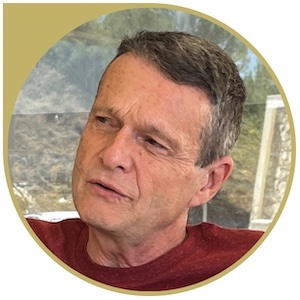
Etienne Wenger-Trayner
Etienne is widely recognised as the originator of the theory of communities of practice and situated learning. His books — including Communities of Practice: Learning, Meaning, and Identity and Learning in Landscapes of Practice — have shaped how organisations around the world approach collective learning. He has consulted with governments, foundations, NGOs, and international organisations across every sector.
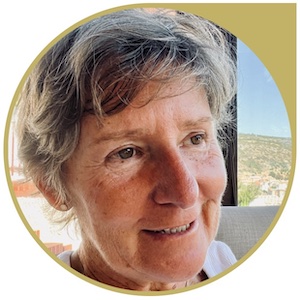
Beverly Wenger-Trayner
Beverly is a leading theorist and practitioner of social learning systems and the ethics of participation. Her work on value creation in communities of practice and social learning landscapes has extended the field in essential directions. She brings decades of hands-on experience facilitating complex, cross-sector learning initiatives in international development, health, education, and beyond.
Together, they are the authors of Learning to Made a Dfference and founders of the Social Learning Lab. They have facilitated social learning across most countries and sectors.
WHO COMES
Previous summits have brought together CoP facilitators, learning designers, community managers, and organisational development practitioners from across the globe. What participants share is not a sector or a job title — it’s a commitment to making communities of practice actually work.
International development
Programme leads, learning advisors, network coordinators
Foundations and NGOs
Learning and evaluation leads, granmaking teams, network weavers
Health and public services
Quality improvement teams, clinical networks, peer learning facilitators
Government
Policy networks, cross-agency collaboration, public sector learning
Health and public services
Quality improvement teams, clinical networks, peer learning facilitators
Corporate and consulting
Organisational learning, knowledge management, communities of practice
WHAT YOU’LL TAKE AWAY
Concrete, applicable and peer-tested
This is not a conference where you accumulate slides you’ll never open again. The summit is designed to send you back to your own community with things you can actually use.
- A shared vocabulary for naming intrusive dynamics — in your community and in yourself — without blame or confrontation
- Strategies from peers for redirecting intrusion into productive participation, developed in contexts that look like yours
- New intrusion archetype cards — a practical tool in development for helping facilitators and members recognise patterns early
- A visual map of your own CoP initiative and where it sits in the wider landscape of summit participants’ work
- Connections with practitioners navigating similar challenges across different sectors and geographies
- A recording of Session 2 for your own reference and for sharing with colleagues who could not participate
- A compiled summary of the strategies and prompts developed in Session 4, shared with all registered participants
MAKING THE CASE
Justifying participation to your organization
We know that participating in an event — even online — often requires making a case. Below is a draft you are welcome to adapt for your own context.
Draft email
Adapt the text below freely
I'd like to register for the Wenger-Trayner CoP Summit, running online on May 18-19, 2026. The focus this year is on intrusion in communities of practice — what happens when participation itself becomes an obstacle to learning.
This is directly relevant to my work. Communities of practice are expensive to facilitate and sustain, and the difference between a community that genuinely generates learning and one that drifts toward performance and information-sharing often comes down to dynamics that are hard to name or address. This summit will give me a shared vocabulary and practical strategies for recognising and working with these dynamics — developed alongside a global peer group of CoP facilitators who are dealing with the same challenges.
The hosts — Etienne and Beverly Wenger-Trayner — are the leading theorists and practitioners in this field. Previous summits have drawn participants from over 30 countries across development, health, education, government, and the private sector.
The cost is €200 for all four sessions. We will share what what we learn with the team after the event.
MAKING THE CASE
From previous summits
“The CoP summit generated precious memories, new friends, great ideas, and a keener sense the landscape of social learning leadership. A personal and professional delight!”
Travis Tennessen, Director, Community Learning Center
Western Washington University
“The CoP Summit was an awesome experience to interact with people from different walks of life who are curious and open to learning. The open sharing of thinking and work is refreshing and stimulating for all concerned”
Mary Wilson, Bats Inc Director, Leadership & Culture Development CoP facilitator
“Participating in the CoP summit is like opening a treasure chest of knowledge, connection, and inspiration.”
“Fellowship, fun, fine food, sharing the social learning journey with like-minded practitioners”
Register
One price all four sessions
€200
Per person | All sessions included
Access to all four 90-minute sessions (participate in any or all)
Session 2 recording, shared with all registered participants
Shared memory materials from Sessions 1,3 &4
Compiled strategy and prompts guide from Session 4
Intrusion archetype cards (digital version)
In-person option (limited places)
Join us in Sesimbra with lunches and dinners included (€400). Contact us to reserve a place
Group discount available for three or more from the same organization. Contact us to discuss pricing
QUESTIONS
Frequently asked
Do I need to participate in all four sessions?
No. You register once for the full summit and attend whichever sessions suit your schedule and interests. There is one flat price regardless of how many sessions you attend.
What platform will you use?
Zoom and a shared whiteboard (such as Mural). Connection details will be sent to all registered participants in advance.
Will sessions be recorded?
Session 2 (the theoretical input and practitioner presentations) will be recorded and shared with all registered participants. Sessions 1, 3, and 4 are participatory and will not be recorded — but shared memory materials, boards, and compiled outputs will be available to everyone.
What if I can’t make it live?
We encourage you to join live where you can — the participatory sessions depend on your presence. But if a session doesn’t work for you, you’ll still receive all shared materials and the Session 2 recording. Session 1 also has an asynchronous option: you can create your visual in advance and it will be visible to all participants throughout the event.
Do I need to have studied communities of practice?
No. The summit is designed for practitioners, not academics. Some familiarity with communities of practice is helpful, but the focus is on shared practical challenges. Session 2 will introduce the relevant theoretical concepts as we go.
Who are the “leading pracitioners” presenting in Session 2?
To be announced once confirmed.